
I agree wholeheartedly with Professor Wallace Stanley Sayer of Columbia University who said:
"In any dispute the intensity of feeling is inversely proportional to the value of the issues at stake....That is why academic politics are so bitter." They are so bitter because the stakes are so low.
I created this website to tell my truth and to expose the fraud and the unethical behavior of my colleagues. Therefore, I understand that the allegations and assertions on this website are not consequential when compared to our epoch-making current events or to the life-and-death issues in many people's lives. These white collar slights and professional skirmishes pale in comparison to the tragedies that people grapple with each day. I acknowledge these important facts about what is important and what is not.
DISCLAIMER:
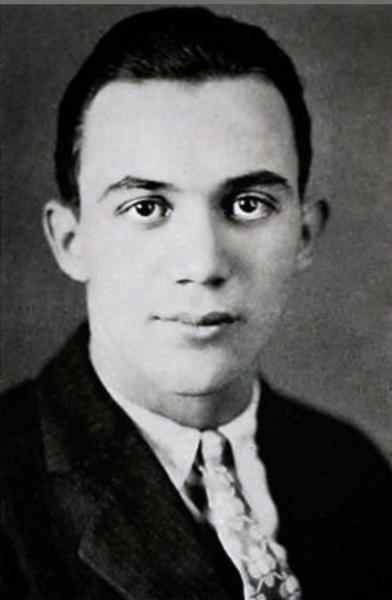
Professor
Wallace Stanley Sayer

Keith Lee Grant's
Personal Perspective
INTRODUCTION
The Genesis Of My Mistrust Of The Tenure/Promotion Process In Academia
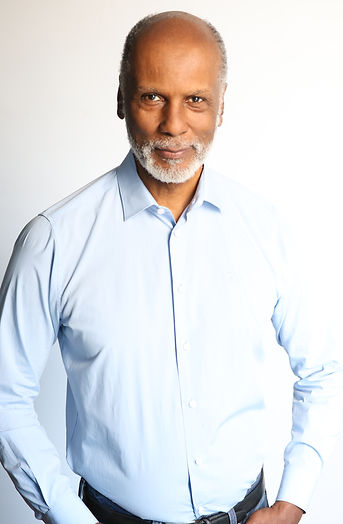
My name is Keith Lee Grant -- I have served on the faculty of The City College of New York’s (CCNY) Theatre and Speech Department for over twenty- five years, and I am a whistleblower. I have a zero tolerance for people in high positions who do not behave honorably. I am exceedingly proud of the fact that on several occasions in my professional life I have exposed the lies and cheating of unscrupulous colleagues who believe that their, "privilege" protects them from consequences when they behave unethically.
About thirty-years ago, in 1995, I was denied promotion and tenure by The Cornell University Theatre Department. I filed a racial discrimination lawsuit, (Grant v. Cornell University) and my case was dismissed -- not on the merits of my allegations but rather because I had an incompetent and grossly unprofessional lawyer, Stephen Berg who was was suspended for new misconduct on April 30, 2012 and disbarred on March 22, 2024.
I knew at the time that Mr. Berg was no match for the experienced Cornell legal team but he was the only attorney that I could afford at the time -- so we lost and the case was dismissed.


-
During the discovery phase of my lawsuit I was given access to the tenure/promotion files of the five White professors who had been tenure/promotion before and after my 1995 review.
-
I was stunned when I saw proof of the Department's double standard for adjudicating White and Black faculty member's tenure/promotion cases. The contrasts between my biased and haphazard tenure/promotion review and the preferential treatment that my White colleagues received were stunning.

"When White people are alone they [do indeed] give things to each other for free."
CAREER VS.PRINCIPLES
I joined the Cornell University faculty in 1989, during an epoch when we were all striving to bring diversity and inclusion to the workplace. Institutions that heretofore were dominated by white males were opening their doors to people of color.
However, in The Cornell University Theatre Department in 1989 I was the only Black person on a faculty that included over 30 professors. Likewise, there were no African Americans or Latinos on the 20 person staff except two Black women in a

diversity training program called The Cornell Interactive Theatre Ensemble (CITE).There is a cruel irony in the fact that while I navigated micro-aggressions from White colleagues and professional isolation, the CITE program was traveling the country teaching other institutions how to:
“… take concepts of diversity and inclusion and make them real and personal for participant groups.”
Past members of the CITE ensemble.
-
I was a child of the 1960s Civil Rights Movement. I was taught to work assiduously to keep the doors to opportunity opened for other people of color, who might need access and my support.
-
This was my transgression at Cornell because I often questioned why I was the only African American on the tenure track faculty or Theatre Department staff.

In addition to asking questions about inclusion and diversity around 1994 I filed a complaint with the Cornell University Affirmative Action Office, because my White colleagues rarely hired actors of color for the Theatre Department's seven-person Resident Professional Teaching Associates (RPTA) program. If we had a role for a Black actor in the season we would hire an actor of color. However if there were no “Black” roles in the season no actors of color would even be considered when we held auditions in New York City each spring. As a Black actor it was infuriating for me to witness how my White colleagues summarily dismissed talented actors of color.
Again, I am a whistleblower. I am proud of the fact that I have always been willing to suffer the professional risks that are associated with being a whistleblower. I have never shied away from speaking truth to power or standing up [to] be counted. Consequently, I file an official complaint against my colleagues, because in addition to the marginalization of Black actors during RPTA auditions there were many other instances of racial bias, and unequal treatment that I witnessed. I could not stand by and allow my colleague's racially insensitive behavior to go unchecked.
To access information about the other
allegations of racism, open the link below:
-
I therefore filed a complaint with the Cornell University Affirmative Action Office regarding the RPTA program about a year before my tenure/promotion review began.
-
I believe that when my colleagues learned that I filed a complaint about the racial bias that I witnessed during RPTA auditions, they retaliated against me for speaking out.
-
When my Department Chairman Bruce Levitt learned about my complaint, the toxic work environment became even more intolerable. In one of our exchanges about integrating the faculty/staff Bruce Levitt bellowed to me,
-
“… you will never be tenured here if you keep talking about these things” [Hiring more actors of color for the aforementioned RPTA program …]

Bruce Levitt
Consequents of Retaliation
-
David Feldshuh (the faculty mentor for my 1995 tenure/promotion review) cryptically threatened me in his office during one of our only discussions about my approaching tenure/promotion review. Feldshuh said:
“… you know we can take the same cv and argue for or against tenure…”

David Feldshuh
Even though I could have stayed another academic year I resigned my assistant professorship at Cornell University the day after I learned of the negative tenure/promotion vote. I then made plans to appeal the decision on-campus. I fully anticipated that my appeal would be unsuccessful so I prepared myself for the contentious, and expensive legal battle that would inevitably ensue.
There was indeed a legal battle. I fought the good fight and lost. However, the fact that I lost in court to Cornell's experienced lawyers with their unlimited funding and considerable resources, did not mean that my allegations were untrue. I had an incompetent and grossly unprofessional lawyer, Stephen Berg who was was suspended for new misconduct on April 30, 2012 and disbarred on March 22, 2024.
I knew at the time that Mr. Berg was no match for the experienced Cornell legal team but he was the only attorney that I could afford at the time -- so we lost and the case was dismissed.
The evidence that I have shared in these website posts offer unequivocal proof that my allegations of bias and unethical treatment were in indeed true. I am sharing this documentation now, thirty-years after the fact, because I sincerely believe that:
“The arc of the moral universe is long, but it bends toward justice.”
Rev. Dr. Martin Luther King Jr.

Consequently, I hope someday to be vindicated. That said, after living on this planet for seven decades I have become a realist; so the truth be told, I doubt that I will ever receive vindication for what I endured at Cornell University from 1989-1995.
I have made my peace with the sad reality that no one may ever take responsibility for vindictively derailing my promotion/tenure review and for destroying my academic career at Cornell. I do however, take solace in the fact that after thirty long years of feeling unheard and invisible, I am finally able to share my story and to tell my truth.

Even though I could have stayed another academic year I resigned my assistant professorship at Cornell University the day after I learned of the negative tenure/promotion vote. I then made plans to appeal the decision on-campus. I fully anticipated that my appeal would be unsuccessful so I prepared myself for the contentious, and expensive legal battle that would inevitably ensue.
There was indeed a legal battle. I fought the good fight and lost. However, the fact that I lost in court to Cornell's experienced lawyers with their unlimited funding and considerable resources, did not mean that my allegations were untrue.
The evidence that I have shared in these website posts offer unequivocal proof that my allegations of bias and unethical treatment were in indeed true. I am sharing this documentation now, thirty-years after the fact, because I sincerely believe that “the arc of the moral universe is long, but it bends toward justice.” Consequently, I hope someday to be vindicated. That said, after living on this planet for seven decades I have become a realist; so the truth be told, I doubt that I will ever receive vindication for what I endured at Cornell University from 1989-1995.
I have made my peace with the sad reality that no one may ever take responsibility for vindictively derailing my promotion/tenure review and for destroying my academic career at Cornell. I do however, take solace in the fact that after thirty long years of feeling unheard and invisible, I am finally able to share my story and to tell my truth.